North Atlantic Ocean
The Good ShepherdThe North Atlantic Ocean is the maritime setting that binds the convoy’s combat and rescue decisions to the same continuing danger. In its stormy darkness, Keeling and the other escort ships pursue U-boats while the convoy presses eastward; even after a submarine is sunk, the sonar continues to sound and the surrounding sea remains a field of possible attack.
A Convoy Crossing Under Threat
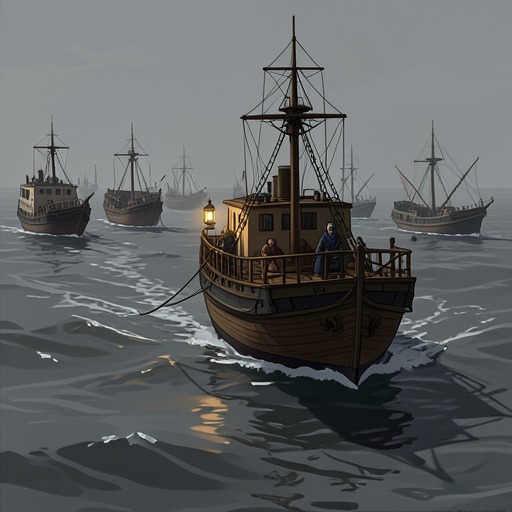
The convoy moves steadily east through the darkness toward safety that remains distant. Keeling does not fight alone: James fires star-shells on the left flank, while Dodge battles attackers on the right and sonar registers distant explosions. The escort ships’ movements repeatedly change as they close, intercept, and resume pursuit, while the convoy continues on its course through the danger.
Rescue and the Cost of Exposure
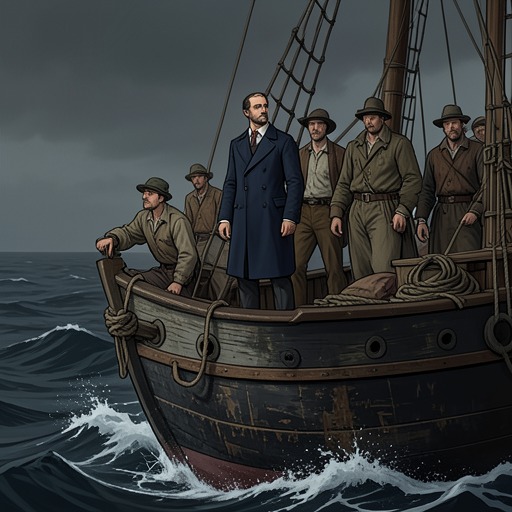
The North Atlantic also makes rescue a decision with immediate stakes. After an explosion, a cry from the sea leads Keeling’s lookouts to spot a survivor on wreckage or a life-raft. The survivor may have escaped the flames, but the cold threatens to kill him within minutes. Cadena is about a mile away, and drawing it back could expose the rescue ship to a submarine’s torpedoes; Keeling’s captain weighs that danger against the lives in the water and the effect abandoning them would have on his own crew. He orders a turn back, choosing to attempt the rescue himself.
A Battlefield of Repeated Encounters
The sea’s combat does not resolve neatly with each attack. A destroyer’s encounter with a U-boat can end with the submarine frightened but apparently unharmed, and such near escapes do not prevent its commanders from fighting again. The narrative stresses the difference between frightening an enemy and destroying it: the latter is required to end the threat, but pursuit and attack expose the escorts to danger in turn.
Continuing Danger and Human Loss
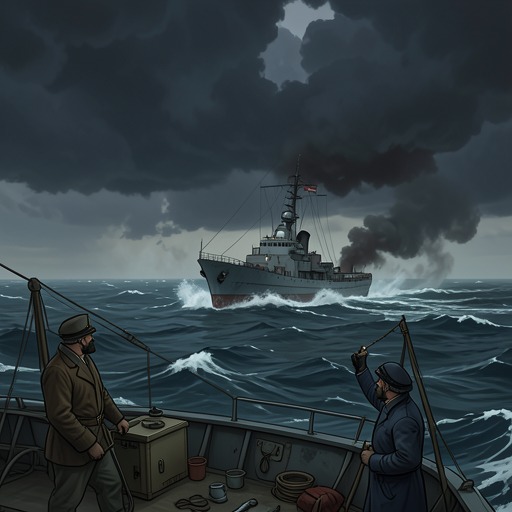
When Keeling’s captain reports that the ship has hit a U-boat repeatedly with its five-inch guns and that Dodge has recovered a survivor, the oil from the sunk submarine is all around them. The victory has cost Keeling shipmates, some of them badly hurt. The captain tells the crew that they must continue, and the scene returns him to the pilot-house, where he hands over the conn while the sonar still pings. The North Atlantic is thus not merely the distance the convoy must cross: it is the persistent setting of combat, rescue, and loss, with no assurance that one engagement will bring safety.